DTM&H candidates frequently ask which course has the highest pass rate — assuming this reflects teaching quality and predicts their individual probability of passing. The reality is more nuanced, and the available data requires careful interpretation.
What Data Exists
The Worshipful Society of Apothecaries (and previously the RCP) publishes overall DTM&H pass rates but historically has not published breakdowns by individual course provider. Some course providers share their own pass rate data in marketing materials, but this is self-reported and may be selective.
Overall DTM&H pass rates have historically been in the 70-85% range, though this varies by year and is influenced by the candidate mix, the specific questions, and the pass mark set by Angoff referencing.
What Drives Variation
Course format. Full-time immersive courses (LSHTM, LSTM) provide intensive, structured learning with extensive microscopy hours and clinical exposure. Part-time courses (Glasgow, Sheffield) are designed for working doctors and require more self-directed study. Neither format is inherently superior, but they suit different learning styles and circumstances.
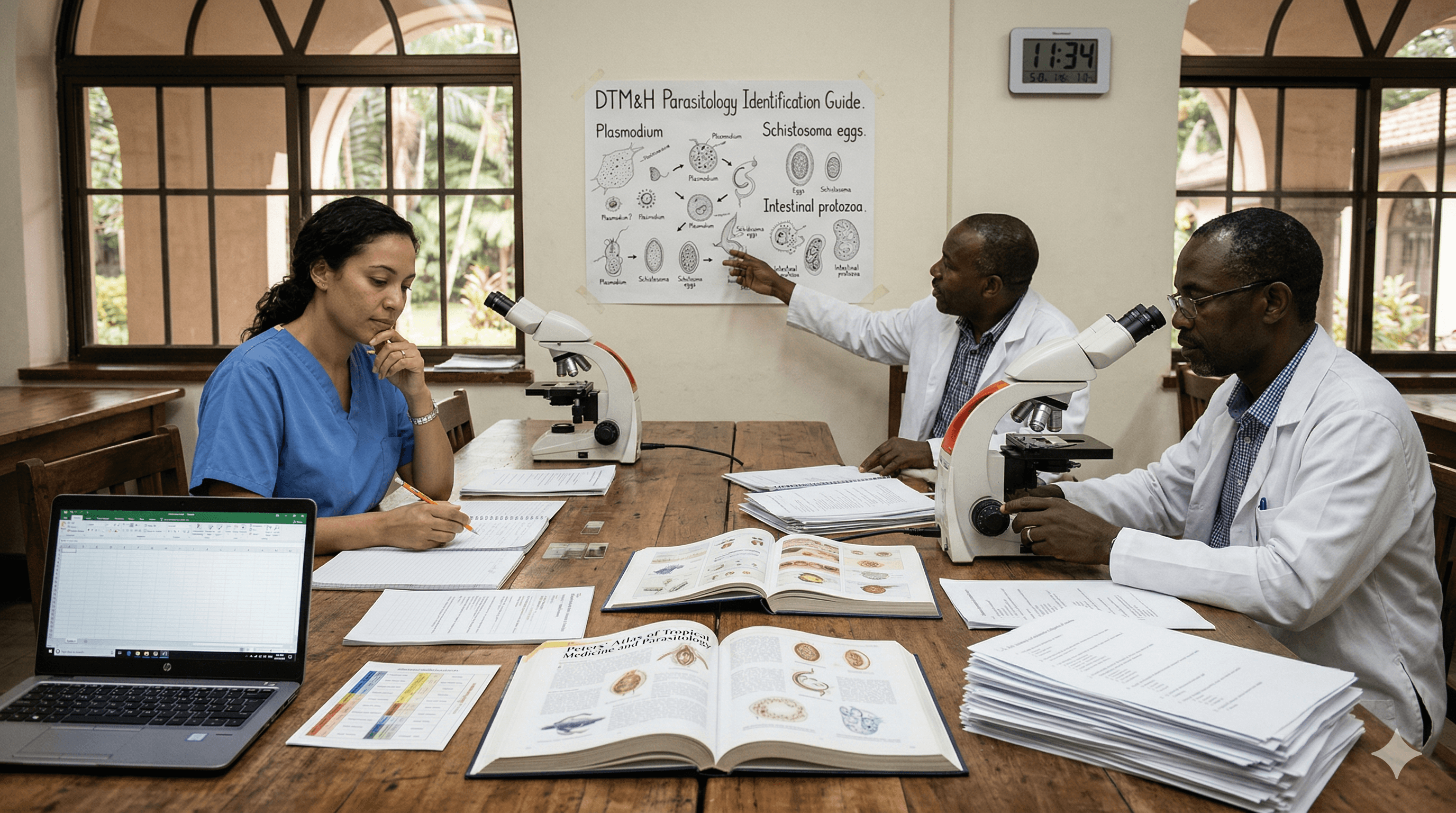
Microscopy hours. The parasitology SAQ paper (Paper 4) tests image-based identification — a skill that correlates directly with practical microscopy experience. Courses with more laboratory hours tend to produce candidates who score higher on Paper 4. The minimum requirement is 12 hours, but some courses provide significantly more.
Candidate selection. Course providers may differ in their entry requirements and the baseline clinical experience of their candidates. Courses with more selective entry may have higher pass rates partly because their candidates start from a higher knowledge base.
Self-selection. Doctors who choose full-time courses at LSHTM or LSTM are often highly motivated with specific career plans in tropical medicine. This self-selection can inflate pass rates relative to part-time courses where motivation may be more variable.
What This Means for You
Choose your course based on your circumstances (full-time availability, location, budget, career goals) — not based on pass rate comparisons that may not be meaningful. All approved courses cover the exam syllabus adequately. The variable that determines your outcome is your preparation quality, not your course provider.
The iatroX DTM&H Q-Bank equalises preparation quality across all course providers. Whether you study at LSHTM or online through Glasgow, the adaptive spaced repetition targets your individual weaknesses and ensures exam-day knowledge retention. 600+ curriculum-mapped questions, available from the start of your course through to exam day.