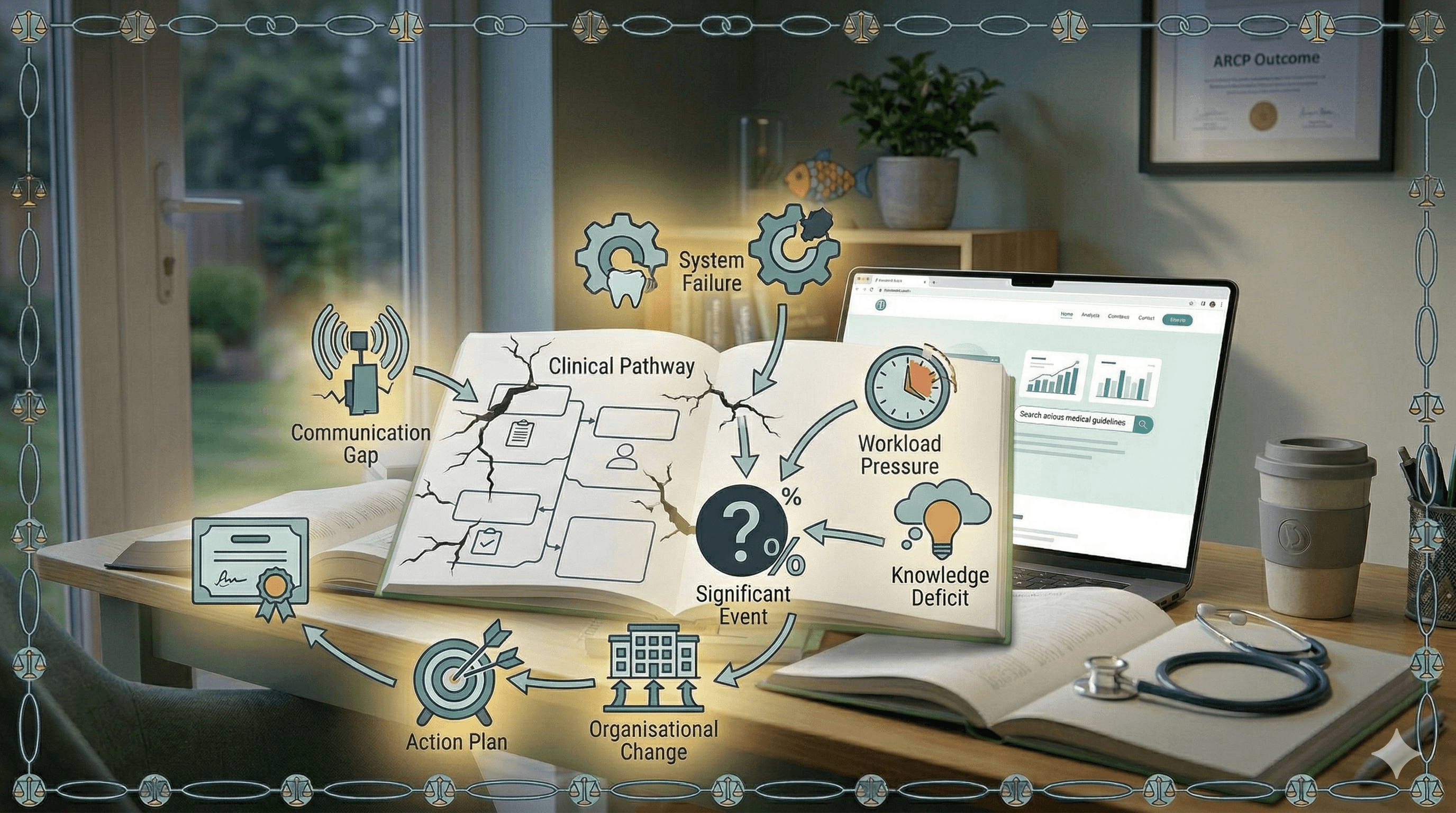
SEAs are among the most powerful portfolio entries — they demonstrate reflective maturity, patient safety awareness, and the ability to think at a systems level. Yet most trainees either avoid them (waiting for "something bad enough to write about") or write them as blame narratives without system analysis.
What Counts as a Significant Event
Near misses — a prescribing error caught before it reached the patient. Diagnostic delays — a condition diagnosed later than it should have been. Safeguarding concerns — where the system worked or where it did not. Complaints — patient or carer concerns about care. Unexpected outcomes — clinical results that surprised you. Positive events — cases where the system worked exceptionally well (often overlooked — panels value these).
You do not need to wait for a dramatic event. A prescribing near-miss, a referral pathway that confused you, or a safeguarding concern that was handled well are all valid SEA topics.
Structure
What happened. Brief, factual, anonymised. Who was involved? What was the timeline? What was the outcome?
Why it happened (root cause analysis). This is the critical section. Was it a knowledge gap? A system failure? A communication breakdown? A workload pressure issue? Analyse the contributing factors — not just the proximate cause.
What has changed. Personal change — what will you do differently? Organisational change — what has been done at practice/system level? Both are expected.
Group discussion. SEAs must be discussed with a group wider than your supervisor — document who was involved, what was discussed, and what actions were agreed. This is a formal requirement.
Common Mistakes
Only describing what happened without analysing why. Not documenting group discussion. Not linking to organisational change (only personal reflection). Not following up on agreed actions. Avoiding positive SEAs — panels want to see system appreciation, not just system criticism.
Where iatroX Fits
After a significant event, use Ask iatroX to explore the clinical question or guideline involved — this deepens your analysis and provides evidence of self-directed learning arising from the event. The knowledge gained may also generate a PDP entry.