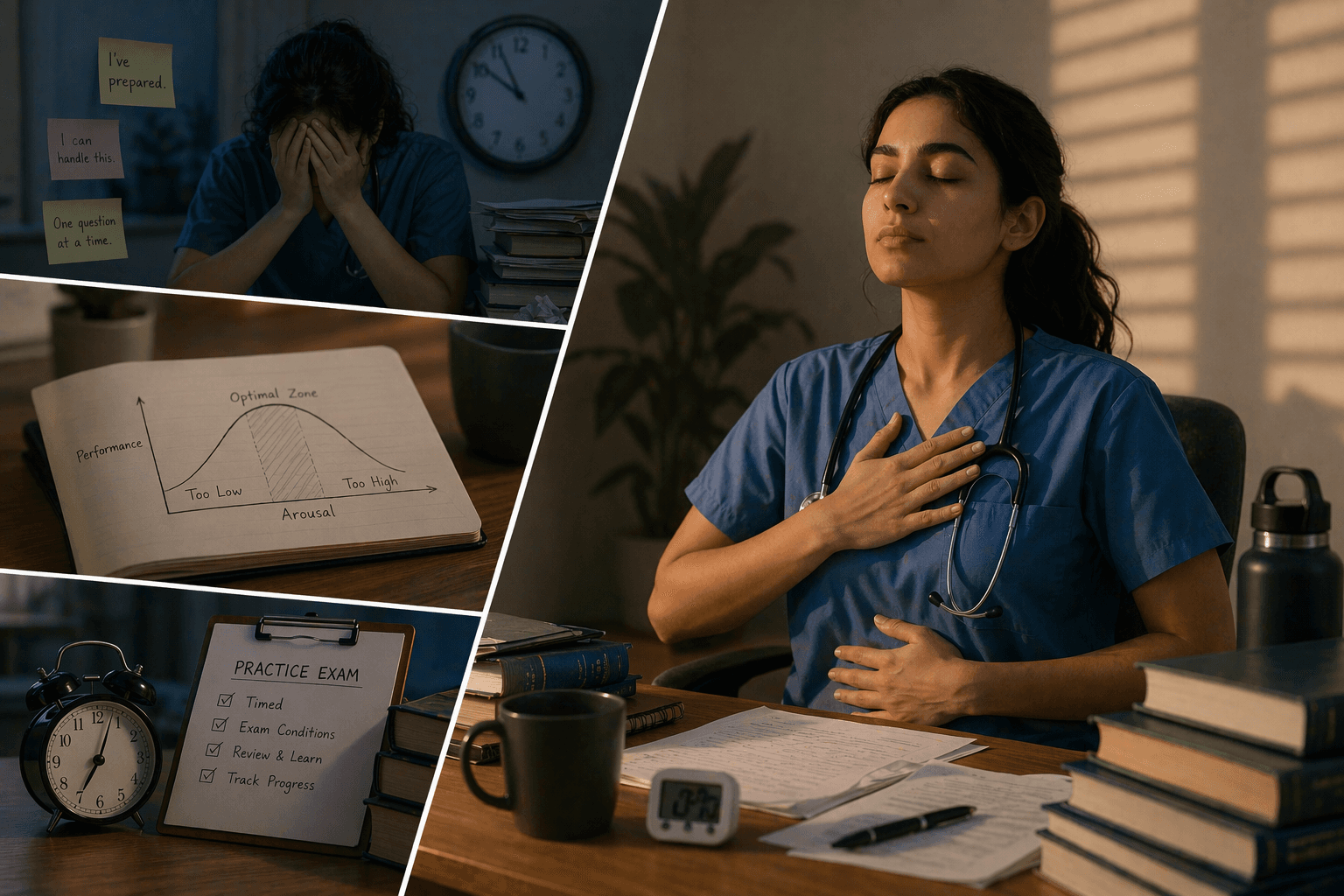
Test anxiety is a physiological response to high-stakes evaluation. Among medical professionals — where exam failure can delay careers by months or years and cost thousands in retake fees — it is near-universal.
Prevalence
Surveys consistently show that 40-60% of medical trainees report significant test anxiety during board exams. The figure is likely higher for IMGs, where the stakes include visa status, sunk costs, and years of preparation. Anxiety is not a sign of unreadiness — it is a sign that you understand the stakes.
The Performance Curve
The Yerkes-Dodson law describes an inverted-U relationship between arousal and performance. Moderate arousal enhances performance — sharpened focus, faster processing, heightened attention. Excessive arousal impairs it — working memory disruption, attentional narrowing, decision-making errors, and time management breakdown. The goal is managing anxiety to the optimal zone, not eliminating it entirely.
Evidence-Based Strategies
Cognitive restructuring. Replace catastrophic thoughts ("I'm going to fail and my career is over") with realistic appraisals ("I have prepared systematically, my NBME scores show readiness, and even a suboptimal outcome is recoverable"). This is not positive thinking — it is accurate thinking. Controlled breathing. The 4-7-8 technique (inhale 4 counts, hold 7 counts, exhale 8 counts) activates the parasympathetic nervous system, directly counteracting the sympathetic arousal response. Practise it before exam day so it is automatic. Exposure and practice testing. The single most effective anxiety reducer is familiarity with the exam format and time pressure. Timed practice blocks, full-length mock exams, and adaptive drills all reduce the novelty of exam day — and novelty is a primary anxiety trigger.
The Preparation-Anxiety Link
The best antidote to exam anxiety is evidence-based confidence in your preparation. Not vague reassurance ("you'll be fine") but concrete data: "My NBME scores are 15 points above target on two consecutive assessments." Consistent daily revision, strong practice exam scores, and a clear study plan produce genuine readiness — which anxiety cannot fundamentally undermine.
Exam Day Logistics
Sleep 7-8 hours (do not sacrifice sleep for last-minute cramming — sleep consolidates memory more effectively than an additional study hour). Eat a familiar breakfast. Arrive early. Use breaks to move and breathe, not to review material. Bring comfortable earplugs and a snack.
When Anxiety Is Clinical
If test anxiety significantly impairs your daily function, preparation quality, or exam performance despite adequate preparation, consider professional support. Generalised anxiety disorder and performance anxiety disorder are treatable conditions — and treatment before the exam is more effective than suffering through it.