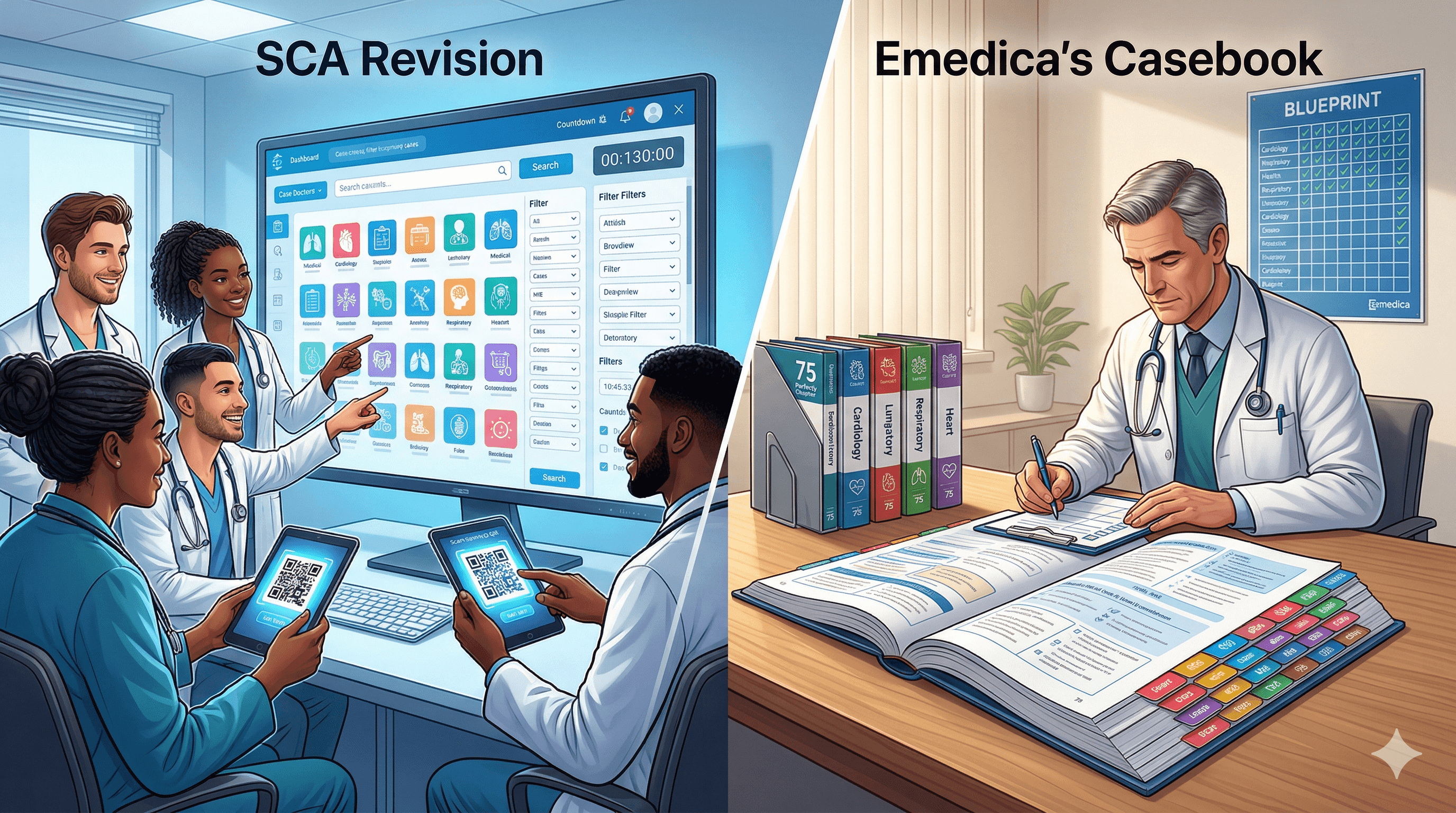
SCA Revision provides 350+ cases in a searchable, filterable platform with timer features, group revision via QR code, and AI patients via SCARevision.ai. The cases are categorised by curriculum heading and include mark-scheme breakdowns. £11.99/month standard.
Emedica's SCA Casebook provides 75 cases mapped to all RCGP SCA blueprint areas — including a full mock exam in SCA format. It is a structured resource designed to ensure complete blueprint coverage without gaps. One-off purchase.
The Breadth vs Coverage Trade-Off
SCA Revision wins on volume — 350+ cases provides extensive exposure to a wide range of clinical scenarios. The searchability means you can target specific curriculum areas. The AI patients and group revision add interactive dimensions. The consultation videos (Premium) show model consultations being marked.
Emedica's Casebook wins on guaranteed blueprint coverage — the 75 cases are specifically mapped to ensure every SCA blueprint area is represented. If you work through all 75, you have covered the full exam scope with no gaps. The structured progression prevents the common problem of practising your favourite topics while neglecting others.
SCA Revision limitation: 350+ cases may have uneven quality — some may be more polished than others, and the sheer volume can feel overwhelming without a structured progression plan.
Emedica limitation: 75 cases may not provide enough repetition for topics you find difficult — once you have done a case, you have done it. For repeated practice, you need additional sources.
Recommendation
Use the Emedica Casebook for structured, blueprint-guaranteed coverage. Use SCA Revision for additional case volume, consultation videos, and interactive practice once you have completed the structured path. The Casebook provides the skeleton. SCA Revision provides the flesh.
Where iatroX Fits
Cases give you exposure. iatroX gives you the knowledge to handle them — adaptive revision identifies and fills knowledge gaps revealed by case practice, and Ask iatroX verifies management pathways when explanations raise questions.