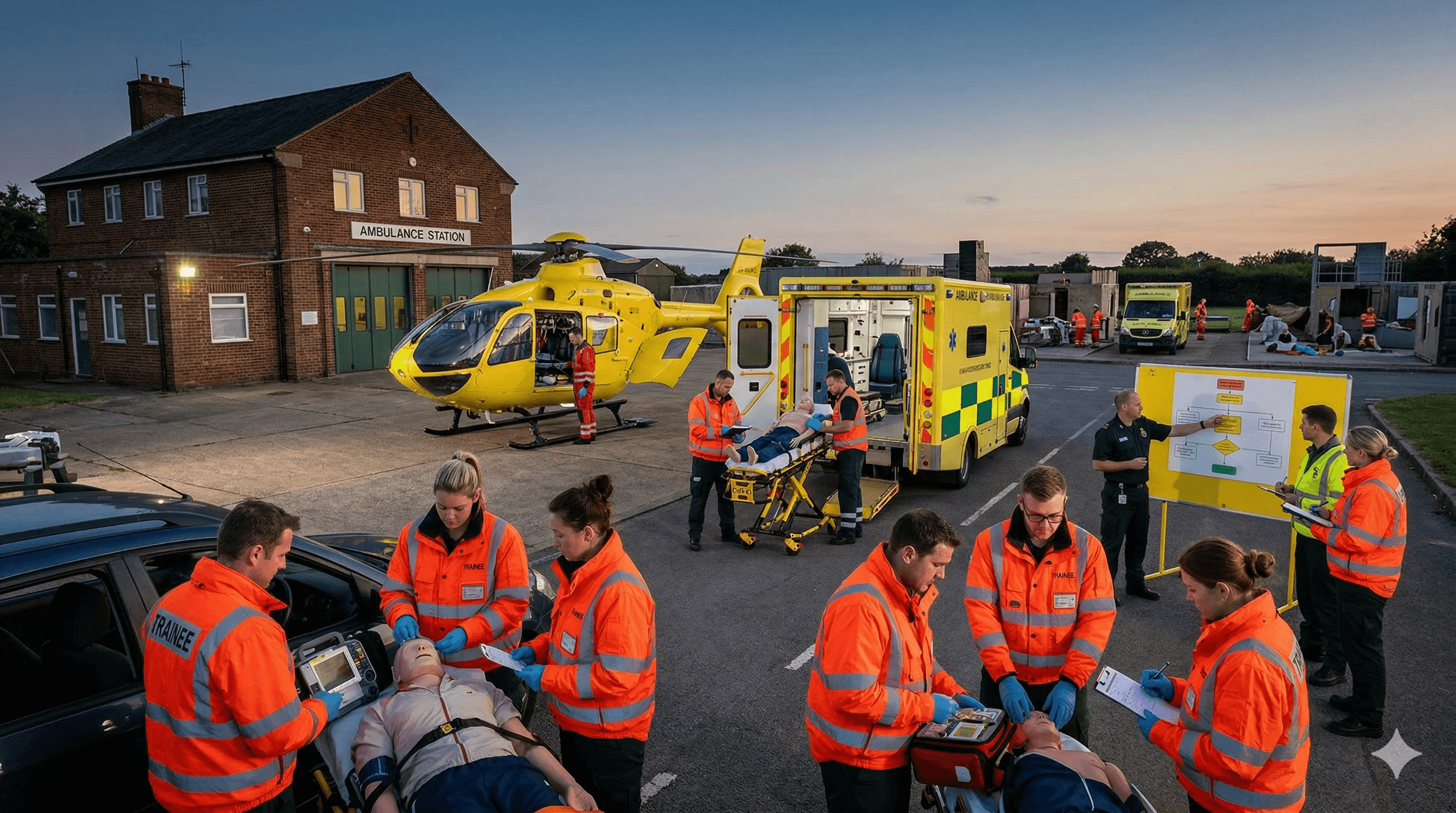
This structured revision course covers the essential pre-hospital emergency medicine knowledge tested in the DipIMC — organised by curriculum domain, with the clinical depth the SBA paper demands and the practical application the OSPE tests.
Module 1: Trauma Management
The foundation of pre-hospital care. Covers the cABCDE approach as a structured framework for every trauma patient, catastrophic haemorrhage control (tourniquets, wound packing, haemostatic agents, pelvic binders), specific injury management (head injury — GCS, pupil assessment, neuroprotection; chest injury — tension pneumothorax, open pneumothorax, flail chest, cardiac tamponade; abdominal injury — clinical assessment, damage control approach; pelvic fracture — binder application, resuscitation strategy; spinal injury — immobilisation decisions, clearing the spine), and damage control resuscitation (permissive hypotension, tranexamic acid, blood product resuscitation, the shift from crystalloid-first to blood-first approaches in major haemorrhage).
Key guidelines: NICE major trauma guidelines, Resuscitation Council UK, FPHC Faculty Statements on trauma topics.
Practice: iatroX DipIMC Q-Bank trauma questions + peer OSPE practice using cABCDE scenarios.
Module 2: Medical Emergencies
Pre-hospital management of medical conditions where time is critical. Covers cardiac arrest (ALS algorithms, reversible causes, post-ROSC management, when to consider termination), acute coronary syndromes (recognition, 12-lead ECG interpretation, pharmacological management, pathway activation), stroke (FAST recognition, time-critical transfer, pre-hospital management), anaphylaxis (recognition, adrenaline dosing, monitoring, refractory anaphylaxis), seizures and status epilepticus (benzodiazepine dosing, when to escalate, post-ictal management), and diabetic emergencies (DKA recognition, hypoglycaemia management, dosing).
Key guidelines: Resuscitation Council UK ALS guidelines, NICE acute management guidelines, JRCALC.
Module 3: Pharmacology
The pre-hospital formulary in depth. Covers analgesics (morphine, fentanyl, ketamine — mechanisms, doses, cautions), sedation and anaesthesia (ketamine, midazolam, propofol — for RSI and procedural sedation), cardiac drugs (amiodarone, adenosine, atropine, adrenaline), obstetric drugs (oxytocin, misoprostol, magnesium sulfate), and drug interactions and adverse effects relevant to pre-hospital practice.
Reference: Ask iatroX for instant SmPC/emc-grounded pharmacology verification.
Module 4: Paediatric and Obstetric Emergencies
The topics candidates fear most — because clinical exposure is often limited. Covers paediatric assessment (age-specific vital signs, APLS approach), common paediatric emergencies (febrile seizures, bronchiolitis, croup, meningitis), safeguarding (recognition of non-accidental injury, documentation, referral), newborn resuscitation (NLS algorithm, temperature management), normal delivery (stages, management, when to call for help), obstetric complications (cord prolapse, shoulder dystocia, breech, PPH, pre-eclampsia), and perimortem caesarean section (indications, timing, technique).
Module 5: Major Incident Management
METHANE reporting (exact format, what each element covers, practice delivery), CSCATTT framework (command, safety, communication, assessment, triage, treatment, transport), triage sieve and triage sort (algorithms, categories, application to multiple casualties), NARU and JESIP principles (command structure, joint working, shared situational awareness), and HART operations (hazardous area response teams, role in CBRN incidents).
Module 6: Scene Management and Professional Practice
Dynamic risk assessment (continuous reassessment throughout the incident), consent and capacity in the pre-hospital setting (managing patients who refuse treatment on scene, Mental Capacity Act application), communication (with patients, bystanders, crews, hospitals, control rooms), documentation (clinical records in the field, legal requirements), and ethical decision-making (futility, resuscitation decisions, organ donation on scene).
How to Use This Course
Work through each module systematically over your preparation period. After completing each module's reading, test your knowledge with the corresponding questions from the iatroX DipIMC Q-Bank. Use Ask iatroX to verify any uncertain management pathways. Practise the practical application of each module's content through OSPE simulation with peers.
The adaptive spaced repetition in the iatroX Q-Bank ensures that Module 1 content is still retained when you reach Module 6 — solving the fundamental problem of exam preparation across a broad curriculum over several months.
A single subscription at iatroX Boards gives you access to the DipIMC Q-Bank alongside other specialty Q-banks. Start today.