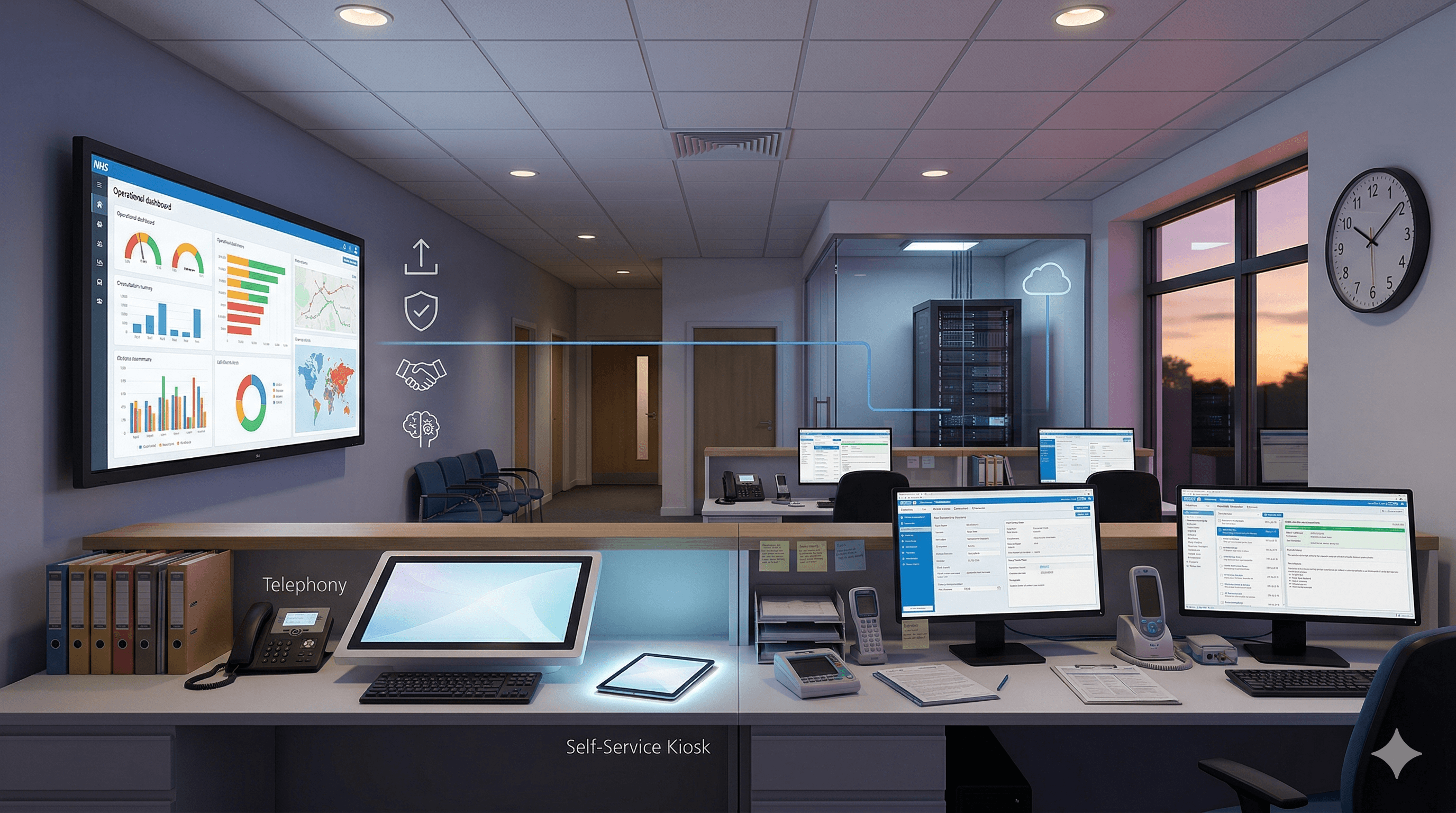
The 2025/26 and 2026/27 GP contracts embed digital access as a contractual obligation. This is no longer about innovation or best practice — it is about compliance. ICBs can issue remedial breach notices to practices that do not comply.
Online Consultation: The Core Hours Requirement
From October 2025, practices must allow patients to submit routine, non-urgent appointment requests, medication queries, and admin requests via online consultation tools during core hours (8am-6:30pm, Monday to Friday). Online systems must not close during the day. By December 2025, NHS data showed nearly 7.4 million patients had submitted GP requests online.
The safety concern that drove the BMA dispute: online tools currently cannot reliably distinguish between urgent and non-urgent requests. A patient submitting what they consider routine may describe symptoms requiring same-day assessment. Without a technical safeguard to flag these, practices risk urgent presentations being buried in a queue of routine requests.
What to do: Ensure your platform (Accurx, eConsult, Anima, Rapid Health, or equivalent) accepts requests throughout core hours. Implement internal triage processes to review online submissions promptly and identify urgency. Document safety concerns through established channels.
GP Connect: Record Access
From October 2025, practices must enable GP Connect for read-only access to patient care records by NHS providers for direct care, read-only access by private providers where the patient gives explicit consent, and write access by community pharmacy registered professionals to send consultation summaries into the GP practice workflow.
The write access element is controversial. Community pharmacists can now send consultation summaries directly into the GP record — reducing administrative burden but raising concerns about data quality, record integrity, and clinical responsibility for externally-written information.
What to do: Ensure GP Connect is enabled in EMIS or SystmOne. Establish a workflow for processing pharmacy consultation summaries — they should not sit unreviewed. Brief the team on the new data flows.
Data Collection: The Five Metrics
The 2026/27 contract introduces mandatory data collection against five access metrics. Cloud-based telephony must report call waiting times. Video and online consultation data must be shared.
What to do: Confirm your telephony system is cloud-based and can generate the required reports. Review your current performance against the five metrics before NHS England's data collection begins. Use the data internally for quality improvement — it is better to identify and address issues before external monitoring does.
Where AI Fits
Online consultation triage tools (particularly Rapid Health Smart Triage) help identify urgency within the online queue automatically. AI ambient scribes reduce per-consultation documentation time, freeing capacity for the additional demand that digital access generates. And clinical reference tools like iatroX ensure that clinical decisions made under increased demand pressure remain guideline-grounded and safe. The contract pushes practices toward higher digital engagement. AI tools make that engagement sustainable.