No. You do not need pre-hospital experience to sit the DipIMC. This is confirmed by the FPHC and is one of the most frequently asked questions about the exam.
The DipIMC is designed to test the knowledge, skills, and behaviours of pre-hospital emergency care practitioners. It does not require you to already be one. Candidates sit the exam from a range of backgrounds — paramedics with years of ambulance experience, emergency medicine trainees with no pre-hospital exposure, anaesthetic trainees considering PHEM, GP trainees, nurses, and military medical personnel.
What You Do Need
Your application must be endorsed by a FPHC Regional Examinations Advisor or an approved PHEM Training Programme Director. This endorsement confirms that your clinical background is appropriate for the exam level — not that you have specific pre-hospital experience.
You need to be a registered healthcare professional (doctor, paramedic, or nurse) with clinical experience relevant to emergency care. The exact requirements are in the DipIMC RCSEd Regulations.
What Experience Adds
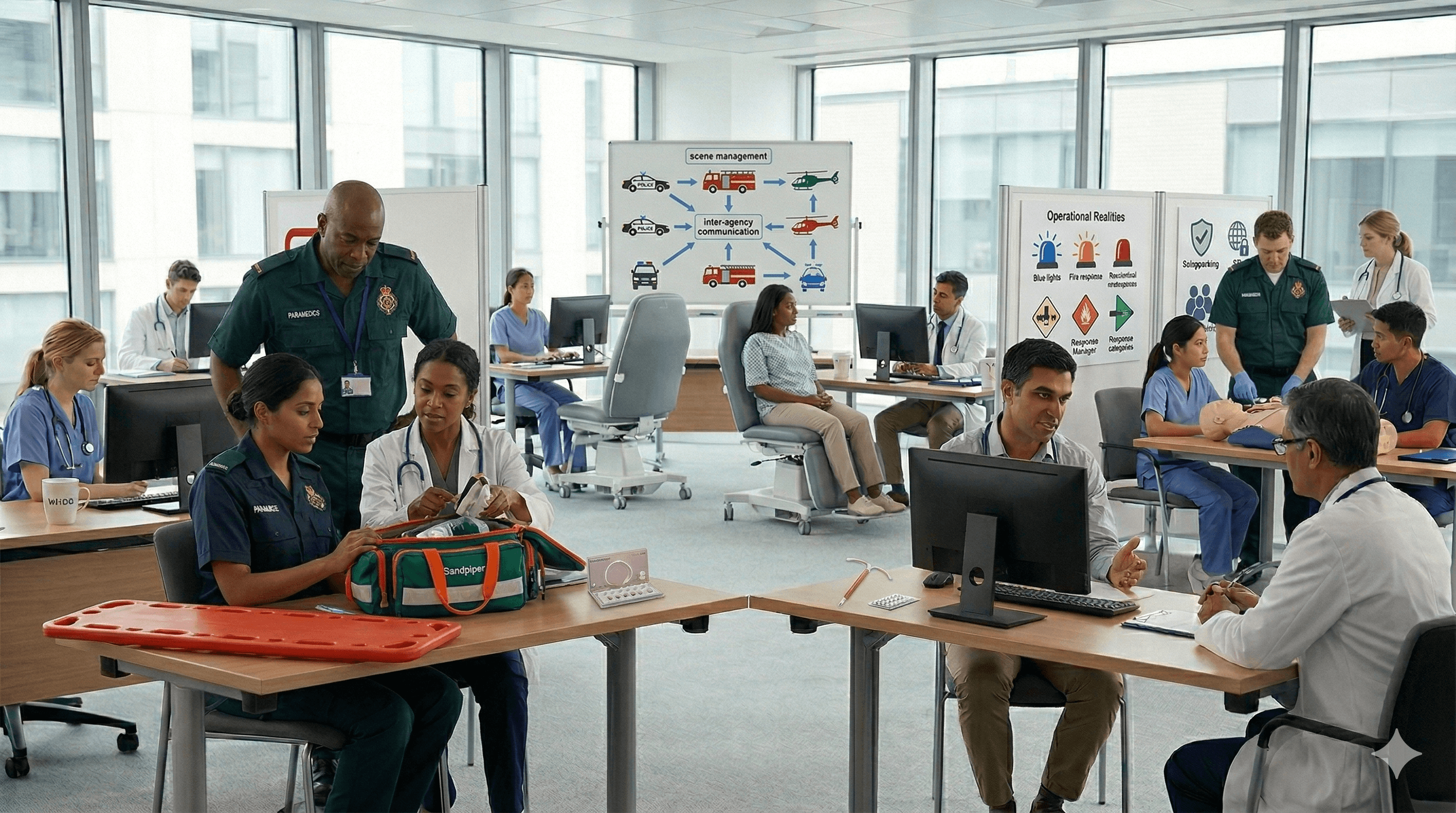
While not required, pre-hospital experience provides context that makes both the SBA paper and the OSPE significantly more intuitive. Candidates who have worked in pre-hospital settings understand scene management dynamics, equipment handling (Sandpiper bag, extrication equipment), inter-agency communication (working with fire, police, HEMS), the specific challenges of treating patients in uncontrolled environments, and the operational realities (response categories, blue light driving, handover protocols) that the exam tests.
Candidates without this experience can — and do — pass. But they need to compensate with specific preparation on pre-hospital operational topics that hospital-based clinical training does not cover.
How to Prepare Without Pre-Hospital Experience
Read the ABC of Prehospital Emergency Medicine as your core textbook — it is written with the DipIMC curriculum in mind and covers both clinical and operational topics. Study the FPHC Faculty Statements (available on the FPHC website) — these cover the pre-hospital-specific topics that hospital experience does not prepare you for. Use the iatroX DipIMC Q-Bank for curriculum-mapped SBA practice — the questions cover pre-hospital-specific scenarios alongside clinical management. If possible, arrange observational shifts with a local ambulance service, BASICS scheme, or air ambulance to gain exposure to the pre-hospital environment. Attend a pre-hospital skills course (ATACC, GNAAS courses, BASICS courses) for hands-on procedural and scenario practice.
The exam is achievable without experience. It is easier with it. Either way, structured preparation with the right resources is what determines the outcome.