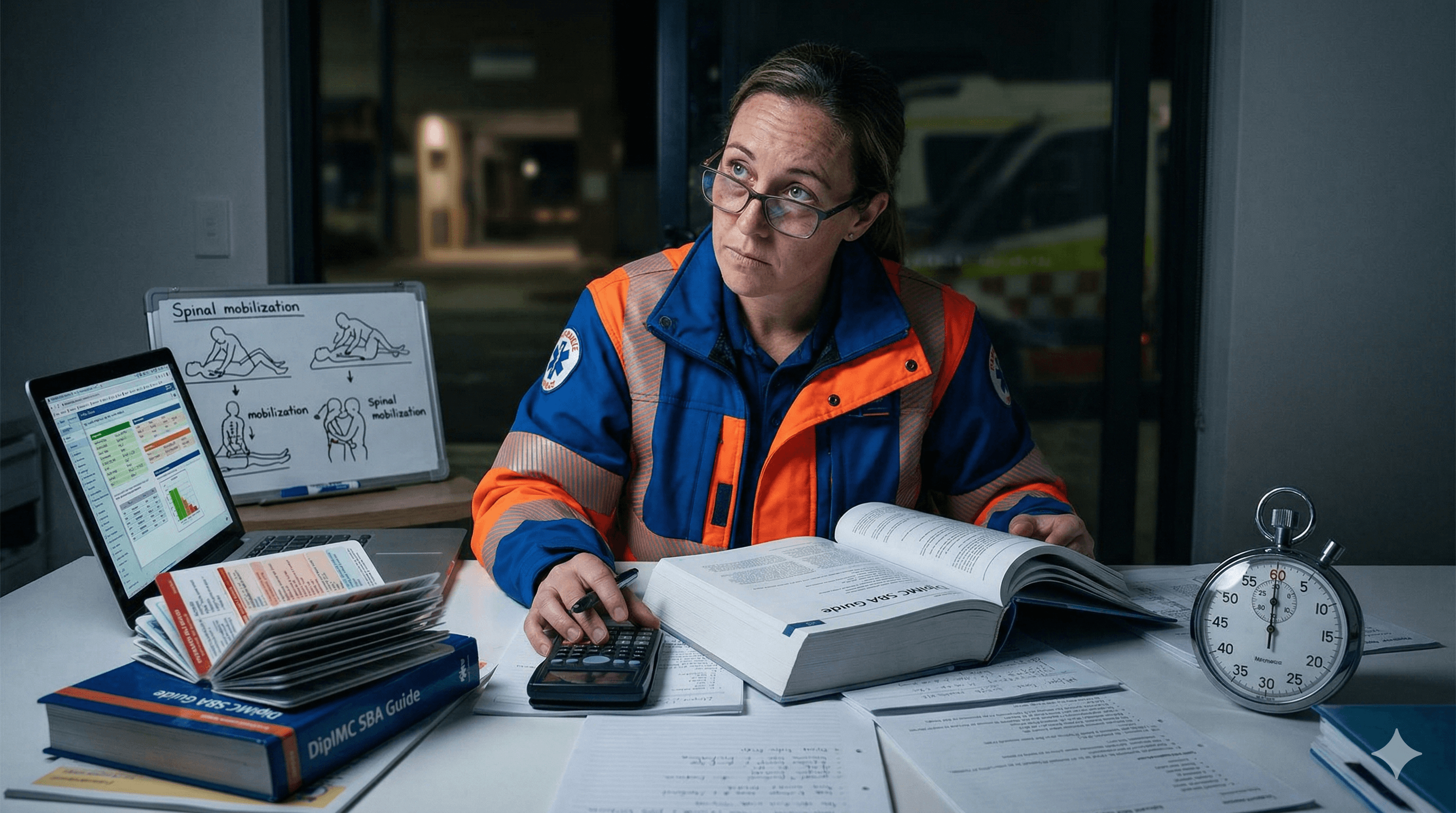
The DipIMC SBA paper covers 180 questions across the full FPHC curriculum in 3 hours. That is 1 minute per question across trauma, medical emergencies, pharmacology, paediatrics, obstetrics, major incidents, and professional practice. You cannot study everything with equal depth. Prioritisation is essential.
Estimated Topic Weighting
Based on the FPHC curriculum blueprint and candidate reports:
Trauma management (20-25%). The single largest topic area. Covers primary and secondary survey, specific injuries (head, chest, abdominal, pelvic, spinal, extremity), haemorrhage control, damage control resuscitation, trauma in specific populations (paediatric, obstetric, elderly). Know cABCDE cold. Know catastrophic haemorrhage management (tourniquets, wound packing, pelvic binders). Know the indications for thoracostomy, cricothyroidotomy, and surgical airway.
Medical emergencies (15-20%). Cardiac arrest (ALS algorithms including reversible causes), acute coronary syndromes, stroke, seizures, anaphylaxis, acute asthma, diabetic emergencies, poisoning, environmental emergencies (hypothermia, drowning, altitude). Pre-hospital context is essential — management in the field with limited resources.
Pharmacology (10-15%). Drug mechanisms, doses, interactions, and adverse effects for the pre-hospital formulary. Anaesthesia and sedation drugs (ketamine, propofol, fentanyl, morphine, midazolam), cardiac drugs (amiodarone, adenosine, atropine), obstetric drugs, paediatric dosing, and the pharmacokinetics relevant to pre-hospital care.
Paediatrics (8-10%). Age-specific physiology, paediatric emergencies, safeguarding, newborn resuscitation, drug dosing by weight, equipment sizing. The APLS approach adapted to pre-hospital settings.
Obstetric emergencies (8-10%). Normal delivery, malpresentation, cord prolapse, shoulder dystocia, PPH, pre-eclampsia/eclampsia, perimortem caesarean section, newborn care. Expanded significantly in recent diets.
Major incident management (8-10%). METHANE, CSCATTT, triage sieve, triage sort, command and control, NARU guidance, JESIP principles, HART operations. Specific to pre-hospital care — not tested in hospital-based exams.
Scene management and professional practice (5-8%). Dynamic risk assessment, capacity on scene, consent, safeguarding, blue light driving regulations, communication with agencies, documentation, ethical decision-making.
Airway management (5-8%). Basic and advanced airway techniques, failed airway algorithms, front-of-neck access, RSI in the pre-hospital setting, capnography, ventilation strategies.
Applied physiology (5-8%). Shock physiology, respiratory physiology, neurophysiology, acid-base, thermoregulation. The "why" behind clinical management.
Priority Framework
Highest priority (50+ hours): Trauma management, medical emergencies, pharmacology.
High priority (25-40 hours): Paediatrics, obstetrics, major incident management, airway.
Standard priority (15-25 hours): Scene management, applied physiology, professional practice.
How to Use This
The iatroX DipIMC Q-Bank with 700+ curriculum-mapped questions implements this prioritisation automatically through adaptive spaced repetition — identifying which topics you are weakest in and allocating your practice time accordingly. Ask iatroX provides instant guideline reference for any topic you encounter during study. The Knowledge Centre enables structured condition-by-condition guideline review.
Focus your time on the high-yield areas. Let the adaptive algorithm handle the precision targeting.