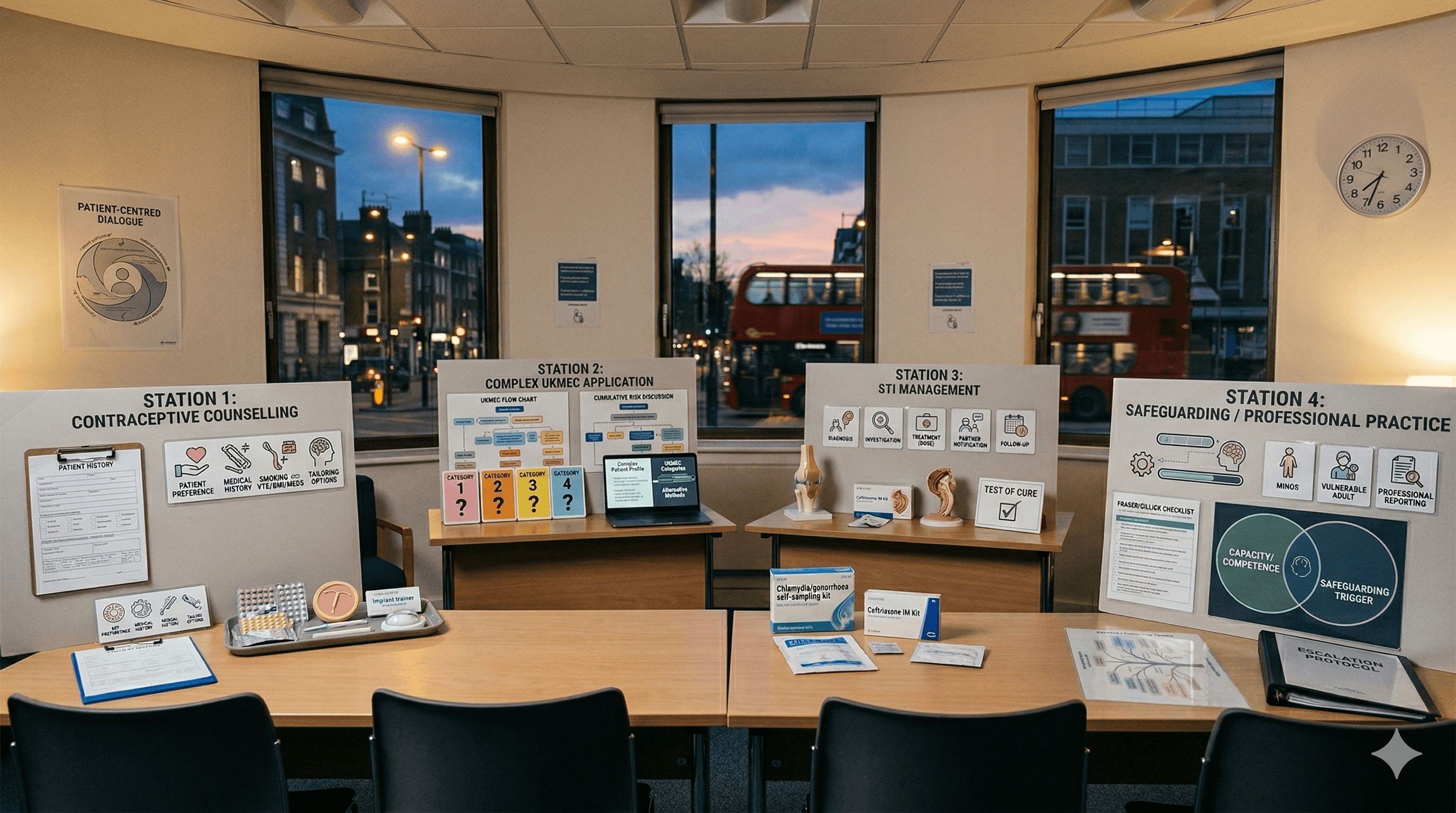
The AHD's four VIVA stations rotate through the core DFSRH domains. While the specific cases change between assessments, the themes are consistent.
Station Type 1: Contraceptive Counselling
A patient (simulated) presents wanting contraception. You must take a focused history, identify relevant medical and social factors, apply UKMEC, discuss appropriate options in patient-centred language, and agree a management plan.
How to approach: Start by asking about the patient's preferences and concerns (what matters to them?). Take a focused medical history relevant to UKMEC (migraine, smoking, VTE history, BMI, medications). Present options clearly — efficacy, advantages, side effects — tailored to the patient. Avoid overwhelming them with every method; focus on the 2-3 most appropriate options based on their history and preferences. Confirm understanding and agree a plan. Safety-net.
Station Type 2: Complex UKMEC Application
A case scenario with a patient who has multiple medical conditions requesting a specific method. You must work through the UKMEC categories systematically, explain why certain methods are or are not appropriate, and discuss alternatives.
How to approach: State the relevant conditions. For each condition, state the UKMEC category for the requested method. If the method is Category 3 or 4, explain why and offer alternatives. If multiple conditions interact, discuss the cumulative risk. Be explicit: "This method is UKMEC Category 3 for this patient because..."
Station Type 3: STI Management
A patient presents with symptoms suggestive of an STI, or you receive STI test results. You must discuss the diagnosis, explain the treatment, address partner notification, and manage any complications.
How to approach: State the likely diagnosis based on the presentation. Explain the recommended investigations. State the first-line treatment (with dose). Discuss partner notification — sensitively but clearly. Address the patient's concerns (stigma, confidentiality, relationship implications). Safety-net for follow-up and test of cure if indicated.
Station Type 4: Safeguarding / Professional Practice
A scenario involving a young person under 16, a vulnerable adult, or a disclosure that raises safeguarding concerns. You must recognise the safeguarding trigger, assess capacity/competence, and take appropriate action.
How to approach: If the patient is under 16: assess Gillick competence. Apply Fraser guidelines if contraception is requested. If there are safeguarding concerns (abuse, exploitation, coercion): prioritise safety, document concerns, and know when and how to escalate. Never promise absolute confidentiality to a minor where safeguarding concerns exist — explain the limits of confidentiality sensitively.
Preparation
Practise talking through these scenarios with colleagues. Use the iatroX DFSRH Q-Bank to build the knowledge base. Use Ask iatroX to verify management pathways. The knowledge from the Q-Bank feeds directly into AHD performance — the same clinical reasoning tested in MCQs is tested verbally in the VIVA stations.